🇬🇷 Greece · Temple complex
Delphi Sanctuary
Geometric to Hellenistic-Roman 8th c. BCE–395 CE; temple 510 BCE · Ancient Greek (pan-Hellenic)
Apollo's oracle sanctuary on Parnassus - spiritual center of ancient Greek world.
Search places, or jump to a section
The catalogue
150 places to sift through. Narrow by kind, country, period or how firmly each one is established — contested and pseudoarchaeological claims are labelled here, never hidden.
🇬🇷 Greece · Temple complex
Geometric to Hellenistic-Roman 8th c. BCE–395 CE; temple 510 BCE · Ancient Greek (pan-Hellenic)
Apollo's oracle sanctuary on Parnassus - spiritual center of ancient Greek world.
🇮🇳 India · Archaeological wonder
Solanki Chaulukya 1022–1063 CE · Gujarati / Solanki Hindu (Maru-Gurjara)
Jewel-box stepwell (1022–1063 CE) built by Queen Udayamati in memory of Bhima I, 64 m long with seven descending galleries and 500+ principal sculptures.
🇹🇷 Turkey · Temple complex
Hellenistic to Roman (288 BCE – 262 CE) · Ptolemaic to Roman Ephesian
Curetes terrace with 36 m Arsinoeion rotunda and Octagon princess tomb.
🇮🇳 India · Temple complex
Chandela period 950–1050 CE · Chandela / Bundelkhand Hindu and Jain
Eighty-five (25 surviving) sandstone temples (950–1050 CE) of Chandela dynasty, celebrated for Nagara shikharas rising in clustered peaks and intricate sculptures.
🇨🇳 China · Megalith
Tang Dynasty 713–803 CE · Tang Chinese Buddhist (Maitreya cult)
71 m seated Maitreya monolith (713–803 CE) carved into Lingyun red sandstone cliff at confluence of Min and Dadu rivers, largest premodern Buddha worldwide.
🇹🇷 Turkey · Temple complex
Hellenistic Attalid to Roman Hadrianic (300 BCE – 130 CE) · Attalid Pergamene to Roman Asia provincial
Upper terrace Trajan–Hadrian Corinthian sanctuary behind Zeus altar.
🇺🇿 Uzbekistan · Archaeological wonder
Timurid Shaybanid 1417–1660 CE · Timurid / Uzbek (Turko-Persian Islamic)
Timurid and Shaybanid plaza framed by three majestic madrasas: Ulugh Beg (1417–1420) with astronomical iconography, Sher-Dor (1619–1636) with tiger mosaics defying aniconism, and Tilla-Kari…
🇮🇳 India · Temple complex
Maurya to Gupta 3rd century BCE–12th century CE (great stupa 260 BCE, gateways 25 BCE–50 CE) · Maurya / Sunga / Satavahana / Gupta Buddhist
Earliest stone Buddhist stupa (Maurya 3rd c BCE, enlarged Sunga 1st c BCE–1st c CE) crowning hilltop at Sanchi, 36.5 m diameter hemispheric brick-and-stone dome encasing relics.
🇮🇳 India · Temple complex
Pallava Dynasty 580–728 CE (Mamalla and Rajasimha phases) · Tamil / Pallava Hindu (Shaiva/Vaishnava)
Pallava (7th–8th c CE) coastal temple town with 40 rock-cut shrines: Shore Temple granite seaside, Five Rathas monolithic chariot-temples cut from single boulders, Arjuna's Penance 27 m bas-relief,…
🇮🇳 India · Rock-cut
Early Chalukya, 6th–7th century CE · Hindu and Jain under Early Chalukya dynasty
Four 6th-c. Chalukya sandstone cave temples at Vatapi with Nataraja and Vishnu iconography.
🇹🇷 Turkey · Temple complex
Archaic to Roman Imperial (600 BCE – 400 CE) · Ionian Greek to Roman Asia
North portico with Hadrianic oracle conduit 200 m from Temple of Apollo.
🇮🇳 India · Temple complex
Mauryan 260 BCE to Pala 12th c CE; temple late Gupta 5th–6th c · Indian Buddhist (Mauryan → Gupta → Pala)
Holiest Buddhist site where Siddhartha Gautama attained enlightenment c.528 BCE under Bodhi Tree descendant.
🇮🇳 India · Rock-cut
Hinayana Buddhist, Satavahana period 2nd c. BCE – 2nd c. CE · Buddhist (Theravada) merchants and Satavahana dynasty
India's largest Buddhist chaitya hall (45 m) with original timber ribs, 1st c. BCE–CE.
🇧🇩 Bangladesh · Temple complex
Pala Buddhist 8th–12th c CE · Pala Buddhist Mahayana–Vajrayana
Somapura Mahavihara at Paharpur — largest single Buddhist vihara south of Himalaya (27-acre cruciform complex) built c.781–820 CE by Dharmapala Pala on Barind alluvium. Excavated 1923–34 by D.R.
🇰🇷 South Korea · Temple complex
Silla Unified · Silla (Kim Dae-seong)
Seokguram Grotto & Bulguksa Temple in Gyeongsangbuk-do, South Korea is a Silla Unified temple complex attributed to Silla (Kim Dae-seong) culture. Inscribed UNESCO World Heritage Site (ID 736).
🇮🇳 India · Temple complex
Satavahana early phase 200 BCE–100 CE; Vakataka renaissance 460–480 CE · Buddhist (Hinayana → Mahayana)
Thirty horseshoe-gorge rock-cut caves overlooking Waghora River with exquisite murals and sculptures: early 2nd century BCE–1st century CE Hinayana phase and later 460–480 CE Mahayana phase under…
🇮🇳 India · Temple complex
Late classical: Kalachuri, Chalukya, Rashtrakuta periods 600–1000 CE · Buddhist, Hindu (Shaiva), Jain under Rashtrakuta patronage
Largest rock-cut monastery-temple complex in world with 34 caves carved 600–1000 CE into basalt Charanandri Hills: 12 Buddhist, 17 Hindu, 5 Jain, including monolithic Kailasa Temple (Cave 16)…
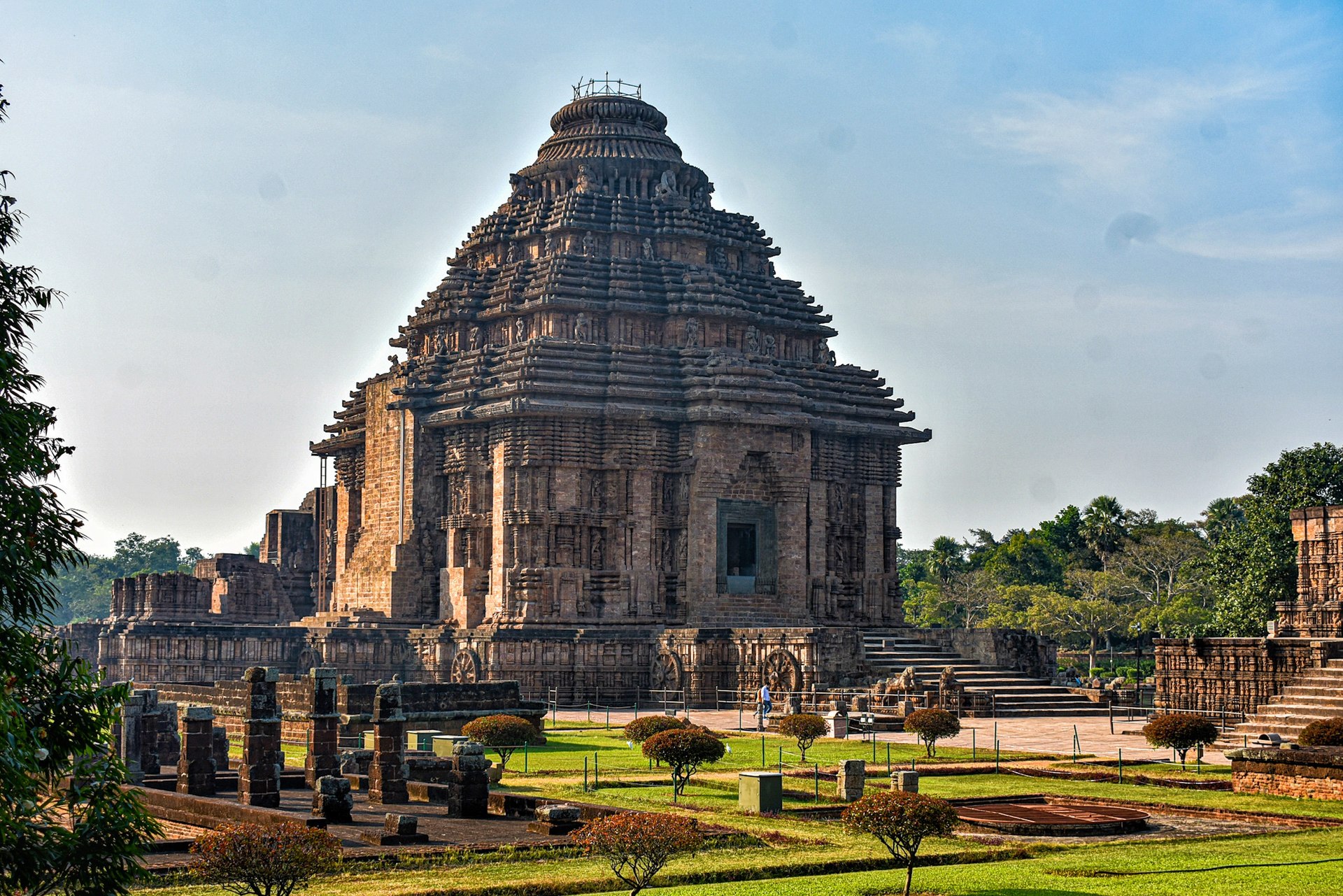
🇮🇳 India · Temple complex
Eastern Ganga · Gangesvara Eastern Ganga (Narasimhadeva I)
Sun Temple, Konârak in Odisha, India is a Eastern Ganga temple complex attributed to Gangesvara Eastern Ganga (Narasimhadeva I) culture. Inscribed UNESCO World Heritage Site (ID 246).
🇬🇷 Greece · Temple complex
Mycenaean to Late Antique · Greek (Apollo/Pythia)
Delphi Archaeological Site in Phocis, Greece is a Mycenaean to Late Antique temple complex attributed to Greek (Apollo/Pythia) culture. Inscribed UNESCO World Heritage Site (ID 393).
🇮🇳 India · Temple complex
Chandela · Chandela Rajput
Khajuraho Group of Temples in Madhya Pradesh, India is a Chandela temple complex attributed to Chandela Rajput culture. Inscribed UNESCO World Heritage Site (ID 240).
🇪🇬 Egypt · Temple complex
Old Kingdom 5th Dynasty (2494–2345 BCE) · Old Kingdom Egyptian (5th Dynasty solar cult)
Only two excavated sun temples of six built by 5th Dynasty kings, Abu Ghurab's open courts with granite obelisks (36 m) and alabaster altars (5.8 m) manifest Ra cult; Borchardt and...
🇮🇳 India · Temple complex
Mauryan to Gupta · Buddhist
Mahabodhi Temple, Bodh Gaya in Bihar, India is a Mauryan to Gupta temple complex attributed to Buddhist culture. Inscribed UNESCO World Heritage Site (ID 1056).
🇸🇩 Sudan · Temple complex
Kushite (3rd c BCE – 4th c CE; Lion Temple c. 300 BCE) · Kushite (Meroitic, King Arnekhamani)
Vast Kushite labyrinth (180×150 m Great Enclosure with 55 columns) and Lion Temple of Apedemak with vivid reliefs of king and lion-god, possibly elephant training ground; Hintze ex...
🇸🇩 Sudan · Ancient city
Makurian Christian (c. 500–1500 CE; cathedral 707 CE) · Makurian Nubian Christian
Annex quarter south of Old Dongolo's famous cruciform church, with 707 CE cathedral (32×28 m) with 6 granite columns, 11th c frescoes of archangels and king portraits, and palace a...