🇯🇴 Jordan · Archaeological wonder
Jabal Ithnayn Kites (Twin Peaks Kite Pass)
PPNB to Late Neolithic · Badia Neolithic peak-pass hunters
Jabal Ithnayn twin-peak gap: 5 kites using two 35-m basalt peaks as natural funnel walls.
Search places, or jump to a section
🇯🇴 Jordan · Archaeological wonder
PPNB to Late Neolithic · Badia Neolithic peak-pass hunters
Jabal Ithnayn twin-peak gap: 5 kites using two 35-m basalt peaks as natural funnel walls.
🇯🇴 Jordan · Ancient village
Late PPNB to Early Pottery Neolithic (7000–6200 BCE) · Southern Levant PPNB → Wadi Rabah (PN)
Late PPNB–Wadi Rabah terrace village tracking Faynan aridity collapse at 7000 BCE.
🇯🇴 Jordan · Ancient village
PPNB to Nabataean · PPNB Levantine to Nabataean
Pre-Pottery Neolithic B village (7200–6500 BCE) 5 km north of Petra at Siq al-Barid ('Little Petra'), first excavated by Diana Kirkbride.
🇯🇴 Jordan · Tell
EBA through Mamluk; Iron II peak · Moabite/Ammonite frontier → Persian Yehud fringe → Byzantine
Madaba Plains giant tell (18 ha) — Iron Ammonite pillared building, 9th c. destruction and Persian reoccupation, largest in Jordan’s Madaba Plains.
🇯🇴 Jordan · Tell
EB through Persian; LB-Iron I transition key · Ammonite frontier; EB Canaanite → LB Canaanite/Ammonite
Ammonite wadi fortress with earliest Levantine four-room house (13th c. BCE) — LB-Iron citadel, casemate-rampart and Persian farm in Madaba Plains.
🇯🇴 Jordan · Archaeological wonder
Chalcolithic to Byzantine (c.4100 BCE–600 CE; peak Iron Age II) · Egyptian New Kingdom (eastern Timna sphere) → Edomite/Neo-Assyrian desert polity → Nabataean → Roman chrome convict mines
Jordanian Arabah slag-mountain copper belt — Iron Age Edomite desert industry outweighing Timna.
🇯🇴 Jordan · Ancient village
LPPNB (Late PPNB) · Levantine LPPNB
Late Pre-Pottery Neolithic B village (7500–6800 BCE, up to 10 ha), one of the largest and highest-altitude Neolithic settlements, controlling the Petra limestone plateau.
🇯🇴 Jordan · Ancient city
Roman to Umayyad (3rd–8th c CE; Byzantine peak 5th–8th c) · Roman / Byzantine / Ghassanid / Umayyad
Desert frontier city on Via Nova Traiana, Umm ar-Rasas contains Roman castrum, five Byzantine churches with superb mosaic floors, and the intact 14×6 m mosaic map in St Stephen's Church (718 CE) –…
🇯🇴 Jordan · Earthwork
Pre-Pottery Neolithic to Bronze Age (~7000–3000 BCE) · Neolithic–Chalcolithic hunter-pastoralist
Over 5,800 kite structures sprawl across the harraat basalt deserts of Jordan, Syria and Saudi Arabia, each comprising two converging low walls up to 5 km long funneling gazelle herds into a stone…
🇯🇴 Jordan · Archaeological wonder
Umayyad Caliphate (c.711–715 CE) · Umayyad Arab / Byzantine influence
Umayyad desert castle bathhouse (qasr) built by Caliph Walid I (705–715 CE) famous for extensive frescoes: vaulted audience hall with hunting scenes, musicians, six kings (Byzantine, Sasanian,…
🇯🇴 Jordan · Earthwork
Late Neolithic to Bronze Age (~5500–2500 BCE; Wheels c.8500 BCE claimed recently) · Levantine Neolithic pastoralist
Scattered across the Azraq lava fields and limestone hammada, geometric Wheels 25–70 m in diameter consist of outer ring, radial spokes and central cairn, often attached to kite tails or isolated on…
🇯🇴 Jordan · Tell
Chalcolithic-Iron Age (c.5000-600 BCE) · Levantine EBA to Iron Age (Jordan Valley)
Tell Nimrin (Tell esh-Shuna North vicinity) — buried chalcolithic-iron tell/village at Balqa Governorate.
🇯🇴 Jordan · Ancient city
Hellenistic to Early Islamic (c.332 BCE–749 CE, peak 1st–3rd c CE) · Graeco-Roman / Nabataean / Byzantine / Umayyad
One of the best-preserved Greco-Roman cities in the Near East, Gerasa was a Decapolis city with colonnaded cardo, two tetrapylons, Hadrian's Arch (129 CE), Oval Plaza, Temple of Artemis and Temple of…
🇯🇴 Jordan · Tell
Chalcolithic-Iron Age (c.5000-600 BCE) · Levantine EBA to Iron Age (Jordan Valley)
Tell Deir Alla (Pethor/Succoth) — buried chalcolithic-iron tell/village at Balqa Governorate.
🇯🇴 Jordan · Hydraulic works
Nabataean Hellenistic–Roman ~100 BCE–106 CE · Nabataean Arab (Hellenistic)
Siq slot-canyon's paired Nabataean canals and flood-tunnel still draining Petra's gorge.
🇯🇴 Jordan · Hydraulic works
Late Chalcolithic to Early Bronze I (3500 – 3000 BCE) · Proto-urban pastoralist Jawa (Jordanian black desert)
West pool of world's earliest 3500 BCE basalt dam network 80 m serving 3,000 desert inhabitants.
🇯🇴 Jordan · Tell
Chalcolithic-Iron Age (c.5000-600 BCE) · Levantine EBA to Iron Age (Jordan Valley)
Tell el-Hayyat — buried chalcolithic-iron tell/village at Irbid Governorate.
🇯🇴 Jordan · Tell
Chalcolithic-Iron Age (c.5000-600 BCE) · Levantine EBA to Iron Age (Jordan Valley)
Tell Abu Suwan — buried chalcolithic-iron tell/village at Mafraq Governorate.
🇯🇴 Jordan · Tell
Chalcolithic-Iron Age (c.5000-600 BCE) · Levantine EBA to Iron Age (Jordan Valley)
Tell Abu al-Kharaz — buried chalcolithic-iron tell/village at Irbid Governorate.
🇯🇴 Jordan · Ancient city
Late Roman/Byzantine to Umayyad · Roman/Byzantine → Umayyad Arab
Black basalt desert castle (qasr) on the shores of seasonal Burqu Lake and Roman strata — possibly Byzantine Valentinian outpost incorporated into Umayyad qusur (~700 CE) — isolated in Harra basalt…
🇯🇴 Jordan · Hydraulic works
Roman Hadrianic (129 – 130 CE) with Byzantine reuse · Roman Gerasene Gerasa Decapolis under Hadrian
9 km Hadrianic Ceys Channel 130 CE to Gerasa reservoir above Cardo at 610 m.
🇯🇴 Jordan · Ancient city
PPNA (c.9300–8600 BCE) · Sultaniyean PPNA
PPNA village (c.9300–8600 BCE) on the Lisan Peninsula at -200 m beside the Dead Sea, excavated by Bill Finlayson. Rectan...
🇯🇴 Jordan · Ancient city
Nabataean to Roman (312 BCE–363 CE earthquake) · Nabataean / Arab
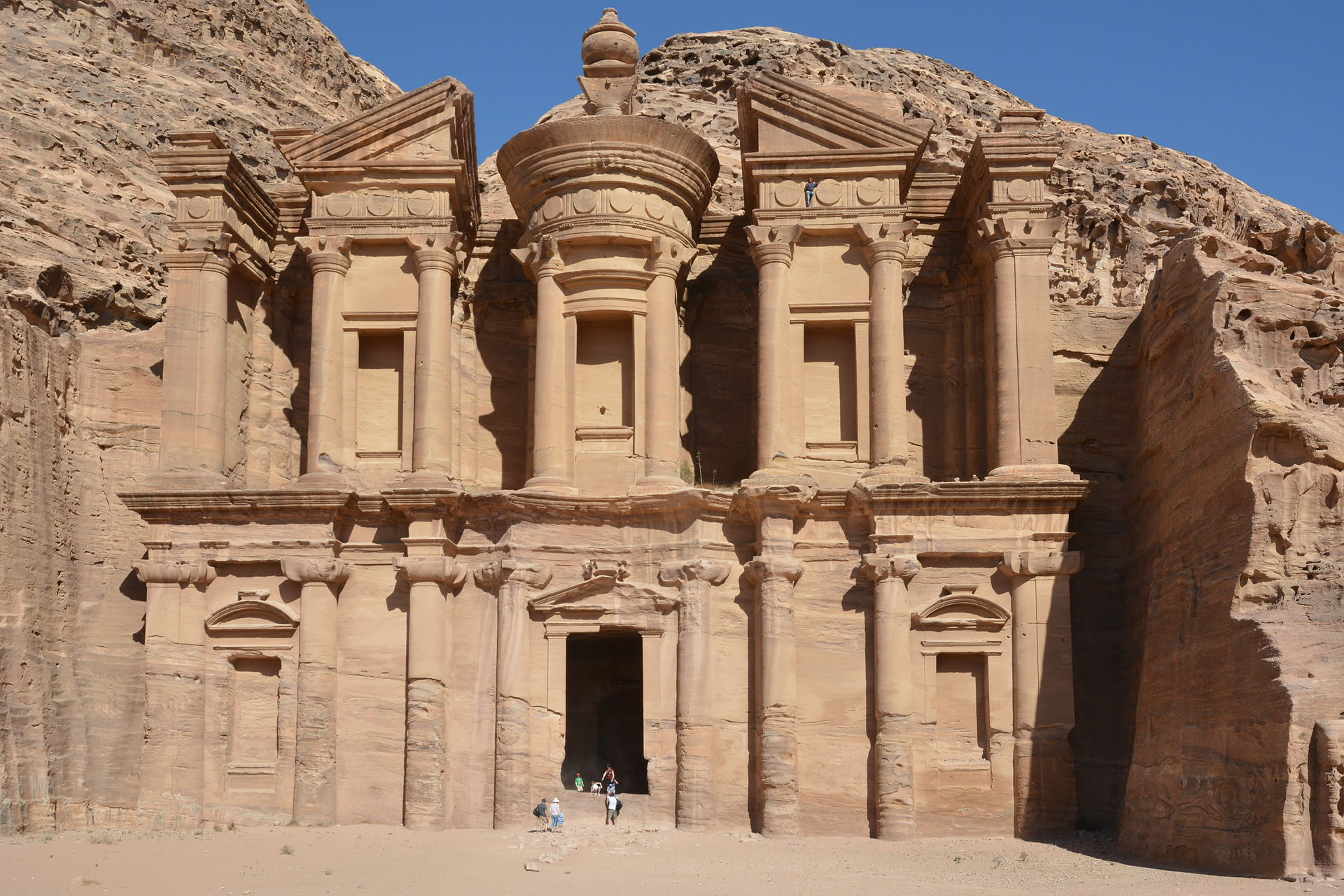
Nabataean caravan city (312 BCE–106 CE) carved into sandstone cliffs: Al-Khazneh Treasury, Theatre, Monastery Ad-Deir, Royal Tombs, and hydraulic system capturing desert flash floods.
🇯🇴 Jordan · Temple complex
Nabataean 1st c BCE–1st c CE · Nabataean
Detailed precinct within Petra (already listed as city) – but as distinct temple elaboration: Al-Khazneh 40 m façade and Ad-Deir 50 m, both tombs-temples with Hellenistic façades.