🇮🇳 India · Rock-cut
Kondane Caves — Karjat Monastery
Satavahana (100 BCE) · Buddhist Hinayana
Kondane Caves — Karjat Monastery in Maharashtra, India is a Satavahana (100 BCE) rock_cut attributed to Buddhist Hinayana.
Search places, or jump to a section
🇮🇳 India · Rock-cut
Satavahana (100 BCE) · Buddhist Hinayana
Kondane Caves — Karjat Monastery in Maharashtra, India is a Satavahana (100 BCE) rock_cut attributed to Buddhist Hinayana.
🇲🇽 Mexico · Tomb
Early Formative (1600–1300 BCE) Early! · Capacha / El Opeño
El Opeño Tombs — Jacona in Michoacán, Mexico is a Early Formative (1600–1300 BCE) Early! tomb attributed to Capacha / El Opeño.
🇲🇽 Mexico · Ancient city
Classic (350–550 CE) · Teotihuacan
La Ventilla Compound — Teotihuacan in Mexico State, Mexico is a Classic (350–550 CE) ancient-city attributed to Teotihuacan. Lapidary workshop compound with mica and obsidian debitage, 20 patios.
🇮🇷 Iran · Tell
Early Neolithic (c.7500–6000 BCE; Ali Kosh sequence 7500–6000 BCE) · Bus Mordeh → Ali Kosh → Mohammed Jaffar (Deh Luran)
Deh Luran Neolithic eponym (7500–6000 BCE) defining Iran's Bus Mordeh–Ali Kosh sequence.
🇩🇿 Algeria · Ancient city
Roman (100 CE – 7th c CE; Trajanic foundation) · Roman (Numidia, Legio III Augusta veterans)
The northern insula quarter of the perfect Trajanic grid city (12×12 insulae), Timgad North exposes veterans' houses, library with mosaic, northern baths and market, beyond the bli...
🇮🇶 Iraq · Tell
Hassuna to Ubaid (c.5900–4300 BCE; Yarim multi-period) · Hassuna → Halaf → Ubaid (Yarim I–III)
Three-mound Hassuna-Halaf-Ubaid reference sequence (5900–4300 BCE) on Sinjar plain.
🇮🇶 Iraq · Tell
Samarran to Ubaid (c.6000–5000 BCE; Samarran floruit 6000–5500 BCE) · Samarran → Choga Mami Transitional → Ubaid
Samarran irrigated village (6000 BCE) with earliest canal (2 km) east of Mandali.
🇮🇷 Iran · Tell
Aceramic Neolithic (c.8500–7300 BCE; Abdul Hosein phase) · Zagros PPN (Abdul Hosein horizon)
Luristan PPN eponym (8500 BCE) on Seimareh — coarse ware before Deh Luran.
🇮🇳 India · Rock-cut
Satavahana (100 BCE–200 CE) · Buddhist
Manmodi Hill Caves — Junnar in Maharashtra, India is a Satavahana (100 BCE–200 CE) rock_cut attributed to Buddhist. 40 Buddhist caves on Manmodi hill opposite Shivneri with chaityas and viharas.
🇮🇳 India · Temple complex
Satavahana early phase 200 BCE–100 CE; Vakataka renaissance 460–480 CE · Buddhist (Hinayana → Mahayana)
Thirty horseshoe-gorge rock-cut caves overlooking Waghora River with exquisite murals and sculptures: early 2nd century BCE–1st century CE Hinayana phase and later 460–480 CE Mahayana phase under…
🇬🇷 Greece · Temple complex
Late 6th c. BCE · Athenian
Small Temple of Nemesis at Rhamnous in Attica, Greece is a Late 6th c. BCE temple-complex attributed to Athenian. Distyle prostyle temple adjoining the larger Nemesis temple, earlier cult focus.
🇲🇽 Mexico · Ancient city
Classic (450–650 CE) · Teotihuacan
Tetitla Apartment — Teotihuacan in Mexico State, Mexico is a Classic (450–650 CE) ancient-city attributed to Teotihuacan. Apartment with eagles and jaguars murals, pulque gods and Tlaloc processions.
🇬🇷 Greece · Cave
Late Neolithic to Early Bronze Age · Final Neolithic / Early Helladic
Vast Neolithic cave complex at Diros Bay, Laconia, used as settlement and burial site 6000–3200 BCE before earthquake sealed entrance.
🇲🇽 Mexico · Temple complex
Classic (450–600 CE) · Teotihuacan
Atetelco Palace — Teotihuacan in Mexico State, Mexico is a Classic (450–600 CE) temple-complex attributed to Teotihuacan. Palatial compound with Jaguar Palace and Courtyard of the Jaguars murals.
🇸🇾 Syria · Tell
PPNA to PPNB (c.9600–8000 BCE) · PPNA → PPNB (Euphrates Neolithic)
PPNA-PPNB village (9600–8000 BCE) with lime-plaster houses on Euphrates Tishrin plain.
🇬🇧 United Kingdom · Megalith
Early Neolithic · Windmill Hill culture
Windmill Hill Causewayed Enclosure in Wiltshire, England, United Kingdom is a Early Neolithic megalithic attributed to Windmill Hill culture culture. Inscribed UNESCO World Heritage Site (ID 373).
🇪🇬 Egypt · Pyramid
Old Kingdom, 6th Dynasty, Merenre I, c.2287–2278 BCE · Ancient Egyptian
Cult pyramid SE of Merenre Nemtyemsaf I pyramid (c.2283 BCE, 6th Dynasty) at South Saqqara. 15.7 m base, limestone, SE corner of enclosure, matching Pepi I pattern.
🇮🇳 India · Rock-cut
Early Historic (100 BCE–500 CE) · Buddhist
Ambivali Caves — Kalyan Hinterland in Maharashtra, India is a Early Historic (100 BCE–500 CE) rock_cut attributed to Buddhist. Small Buddhist cave cluster near Ulhas river with 2 viharas and chaitya.
🇬🇷 Greece · Rock shelter
Late Upper Palaeolithic · Epigravettian
Small Epigravettian rockshelter in the Voidomatis Gorge, 2 km from Klithi, with 14,000–10,000 BP deposits including microliths, bone tools and faunal remains of ibex and chamois.
🇬🇷 Greece · Ancient city
Cycladic to Hellenistic · Cycladic/Greek
Delos (Island of the Gods) in Cyclades, Greece is a Cycladic to Hellenistic ancient city attributed to Cycladic/Greek culture. Inscribed UNESCO World Heritage Site (ID 530).
🇮🇳 India · Temple complex
Late classical: Kalachuri, Chalukya, Rashtrakuta periods 600–1000 CE · Buddhist, Hindu (Shaiva), Jain under Rashtrakuta patronage
Largest rock-cut monastery-temple complex in world with 34 caves carved 600–1000 CE into basalt Charanandri Hills: 12 Buddhist, 17 Hindu, 5 Jain, including monolithic Kailasa Temple (Cave 16)…
🇬🇹 Guatemala · Ancient city
Late Classic Maya · Maya (K'ak' Tiliw satellite of Copán)
Quiriguá in Izabal, Guatemala is a Late Classic Maya ancient city attributed to Maya (K'ak' Tiliw satellite of Copán) culture. Inscribed UNESCO World Heritage Site (ID 149).
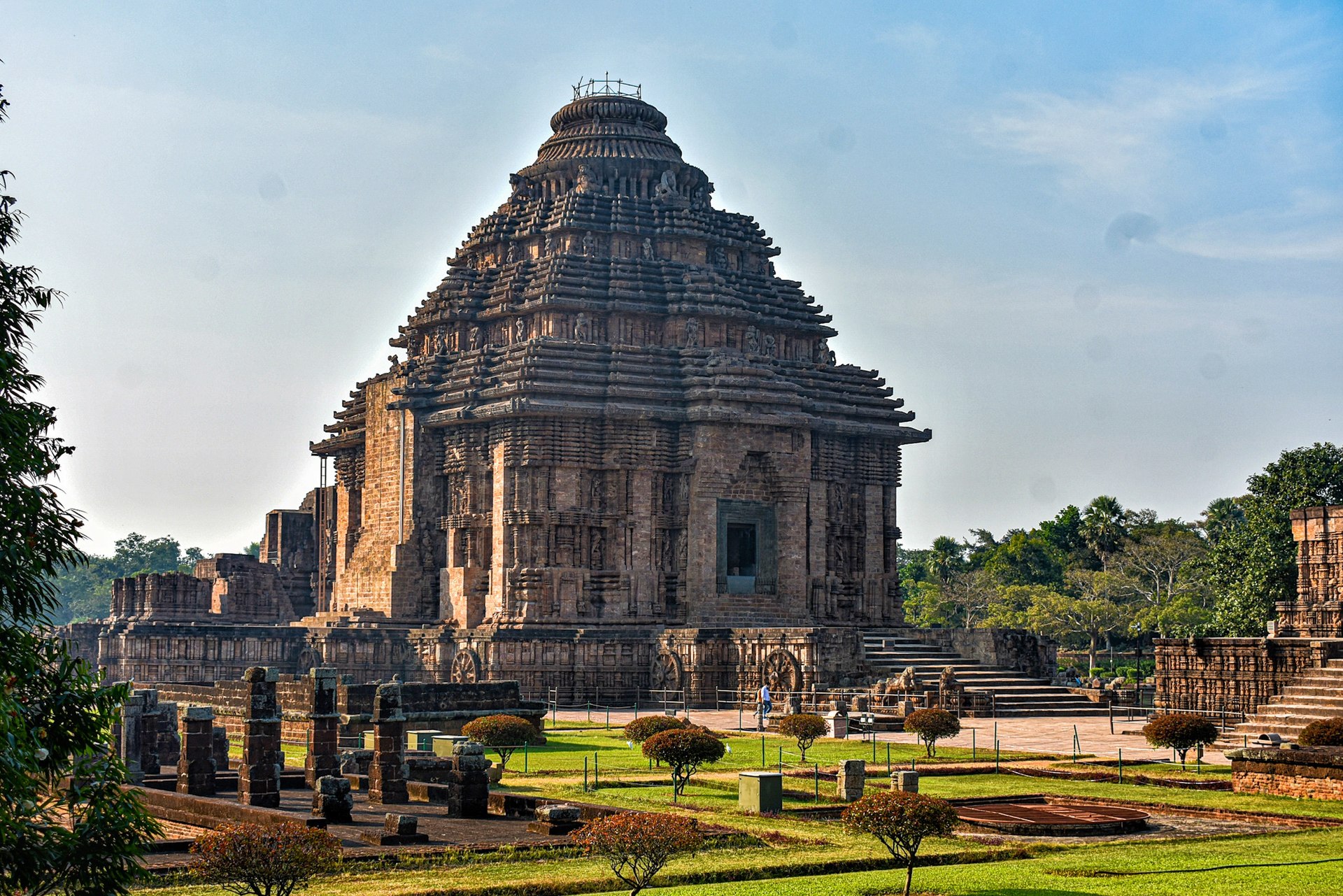
🇮🇳 India · Temple complex
Eastern Ganga · Gangesvara Eastern Ganga (Narasimhadeva I)
Sun Temple, Konârak in Odisha, India is a Eastern Ganga temple complex attributed to Gangesvara Eastern Ganga (Narasimhadeva I) culture. Inscribed UNESCO World Heritage Site (ID 246).
🇲🇽 Mexico · Tomb
Late Formative (300 BCE–400 CE) · Western Mexico
Tabachines Shaft Tombs — Atemajac in Jalisco, Mexico is a Late Formative (300 BCE–400 CE) tomb attributed to Western Mexico. Cluster of 11 shaft tombs at Atemajac valley with box tombs intrusive.