🇨🇳 China · Rock-cut
Bingling Temple Lower Grottoes — Liujia Gorge Yellow River Cliffs
Western Jin to Yuan (300 – 1300 CE) · Buddhist Hexi nomad to Tang imperial
Lower cliffs with 420 CE earliest inscribed cave 169 of 169 caves at Liujia Reservoir.
Search places, or jump to a section
CategoriesTemple complexes
Sacred precincts, sanctuaries and the architecture of ritual.
🇪🇬 Egypt · Temple complex
Ptolemaic (237–57 BCE) · Ptolemaic Egyptian (Hellenistic Pharaonic)
Best-preserved temple in Egypt: Ptolemaic Temple of Horus built 237–57 BCE (180 years) after plan of Old Kingdom then New Kingdom prototypes, buried by Nile silt and desert sand until re-excavated by…
🇨🇳 China · Rock-cut
Western Jin to Yuan (300 – 1300 CE) · Buddhist Hexi nomad to Tang imperial
Lower cliffs with 420 CE earliest inscribed cave 169 of 169 caves at Liujia Reservoir.
🇪🇬 Egypt · Temple complex
Middle Kingdom to Ptolemaic (c.2000 BCE–100 CE; major phase New Kingdom 1550–1070 BCE) · Egyptian Pharaonic (Middle Kingdom to Greco-Roman)
Largest temple complex in Egypt – 200 acres built over 1,500 years from Senusret I (1956 BCE) to Romans.
🇹🇷 Turkey · Temple complex
Hellenistic to Late Roman ~300 BCE–395 CE · Greek (Colophonian) then Roman Ionian
Underground water-oracle of Apollo where prophet drank sacred pool to versify prophecies.
🇹🇷 Turkey · Temple complex
Hellenistic to Roman Imperial 281 BCE–300 CE · Seleucid Greek over Carian; later Roman
Seleucid league city and Hekate crossroads sanctuary linked by 8 km sacred way with frieze.
🇹🇷 Turkey · Ancient city
Urartian Kingdom 8th–6th century BCE (late empire western frontier) · Urartian → Median → Achaemenid
Argishti II's Euphrates citadel with pillared hall, subterranean passage and ivory tombs.
🇰🇭 Cambodia · Temple complex
Angkor Early–Classical transition · Hindu (Vishnu? Shaiva debated)
Unrestored jungle-strangled temple-city (early 12th c., possibly Suryavarman I–Suryavarman II transition, ~1110–1120) at 110×120 m moated eastern face now collapsed into rubble choked by silk-cotton…
🇮🇶 Iraq · Pyramid
Early Dynastic to Parthian (3000 BCE–250 CE; ziggurat Ur III – Kassite layers) · Sumerian → Old Babylonian → Kassite → Assyrian
Religious capital of Sumer: never politically capital but seat of Enlil, father of gods, whose temple E-kur (Mountain House) dominated canal holy city Nippur.
🇮🇳 India · Temple complex
Early Pandya origins 6th c., current Nayak 1623–1655 CE · Hindu (Shavite-Shakti) under Nayak kingdom of Madurai
Sprawling Nayak temple-city with 14 colourful gopurams and musical stone pillars.
🇮🇶 Iraq · Pyramid
Old Babylonian to Neo-Babylonian (Hammurabi to Nebuchadnezzar II peak 605–562 BCE) · Babylonian (Borsippa)
Mighty 7-stage ziggurat dedicated to Nabu (god of writing, son of Marduk), rival to Babylon's Etemenanki as 'Temple that Exalts Nabu' E-zida.
🇪🇬 Egypt · Temple complex
New Kingdom 20th Dynasty (c.1186–1155 BCE under Ramesses III) · Egyptian New Kingdom
Mortuary temple of Ramesses III (1186–1155 BCE) modeled on Ramesseum, Medinet Habu is best-preserved New Kingdom mortuary complex with complete circuit walls, fortified Migdol gate inspired by…
🇵🇪 Peru · Temple complex
Late Horizon Inca Imperial 1440–1536 CE · Inca
Qhapaq Ñan tambo with 28-niche polygonal usnu platform of perfectly fitted octagonal andesite.
🇨🇳 China · Temple complex
Tang → Yuan → Ming Yongle peak → Qing · Taoist (Zhenwu / Xuanwu school)
Taoist sacred mountain complex on 72 peaks 800–1612 m, 9 palaces, 36 convents and 72 cliff temples built primarily 1412–1424 under Ming Yongle emperor (200,000 artisans) as political legitimation…
🇸🇪 Sweden · Tumulus
Vendel Period to Early Middle Ages (c.500–1150 CE) · Vendel Period Scandinavia / Early Swedish Kingdom
Magnate complex with three monumental Vendel Period royal burial mounds (Östhögen, Mellanhögen, Västhögen, 50–75 m diameter, 8–11 m high, c.550–600 CE), Thing mound and a 12th-century church on the…
🇬🇹 Guatemala · Pyramid
Preclassic 1000 BCE – Late Classic 900 CE; peak 600–900 CE · Maya (Yaxhá kingdom)
Major Late Classic lakeside Maya city 237 structures and 40 stelae on Yaxhá Lake isthmus: Twin North Acropolis, East Acropolis triadic Temple 216 (26 m high, painted red, largest in Yaxhá, second…
🇹🇷 Turkey · Temple complex
Hellenistic (350–150 BCE) with Roman annex · Milesian-Ionian Prieneans under Alexander patron
Council sanctuary with 640-seat Bouleuterion and Augustus calendar stoa 40 m from Athena temple.
🇨🇳 China · Temple complex
Sixteen Kingdoms → Qing 420–1911 · Buddhist (Hexi Silk Road)
Yellow River gorge sanctuary of 183 caves and 694 statues cut into 60 m yellow sandstone cliff above reservoir since 420 CE (Western Qin) to Qing, famous for 27 m Maitreya Buddha (Tang) carved from…
🇮🇳 India · Ancient city
Satavahana to Ikshvaku Late Andhra 200 BCE–400 CE · Ikshvaku / Mahayana Buddhist
Vast Ikshvaku dynasty capital and Buddhist university city (c.200–400 CE) on Krishna River, 30+ Buddhist monasteries with 9 mahastupas, Brahminical temples and Europe's largest collection of early…
🇪🇬 Egypt · Temple complex
Early Dynastic to Greco-Roman (Djoser 2670 BCE; Apis catacombs New Kingdom to Ptolemaic, 1400–30 BCE) · Egyptian Pharaonic (Memphite)
Great necropolis of Memphis: Step Pyramid of Djoser (Imhotep, 2670 BCE) – world's oldest large stone structure – plus 17 pyramids including Teti, Unas (Pyramid Texts), underground galleries, and the…
🇨🇳 China · Rock-cut
Later Qin to Song (384 – 1279 CE) · Buddhist Hexi to Central Plains transition at Wei River gap
East face stacked 90 caves 142 m hill with 16 m Buddha and plankway tiers.
🇲🇽 Mexico · Temple complex
Late Classic 550–850 CE · Maya (Río Bec–Chenes–Central Petén blend)
Secondary plaza 600 m from hieroglyphic stairway: 15 m pyramid with Wak alliance altar, marsh causeway.
🇲🇽 Mexico · Pyramid
Middle Formative Olmec 1000–400 BCE (pyramid c. 1000–600 BCE) · Olmec
Olmec capital La Venta (1000–400 BCE) great pyramid Complex C: 31–33 m high clay mound (150 × 130 m base, volume 100,000 m³), earliest known intentional pyramid in Mesoamerica (1000 BCE) – uniquely…
🇬🇷 Greece · Temple complex
Late Archaic 500–490 BCE · Aeginetan Greek
Aegina ridge-top Doric temple whose pediments chart birth of Classical sculpture.
🇮🇷 Iran · Temple complex
Middle Elamite (c.1250–640 BCE) · Elamite
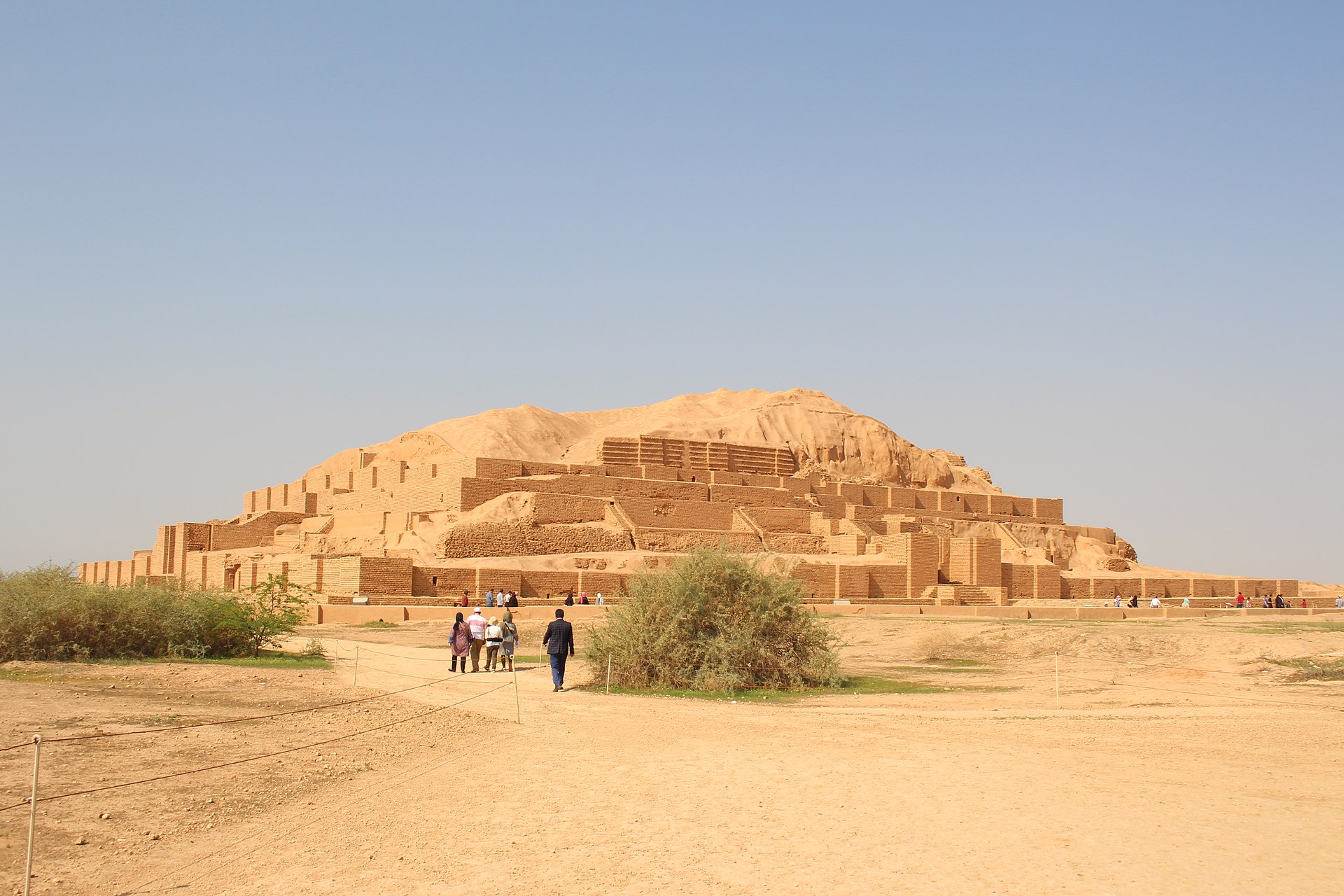
Elamite holy city built by King Untash-Napirisha (1250 BCE) to honor god Inshushinak: immense 105×105 m square ziggurat (originally 53 m high, 5 storeys) at center of three concentric walls with…