🇺🇸 United States · Earthwork
Larkin Mound
Middle Woodland Weeden Island 200–600 CE · Weeden Island / Gulf Hopewell
Crystal River satellite burial mound with Hopewell copper and quartz, Gulf Hopewell southernmost evidence.
Search places, or jump to a section
🇺🇸 United States · Earthwork
Middle Woodland Weeden Island 200–600 CE · Weeden Island / Gulf Hopewell
Crystal River satellite burial mound with Hopewell copper and quartz, Gulf Hopewell southernmost evidence.
🇺🇸 United States · Ancient village
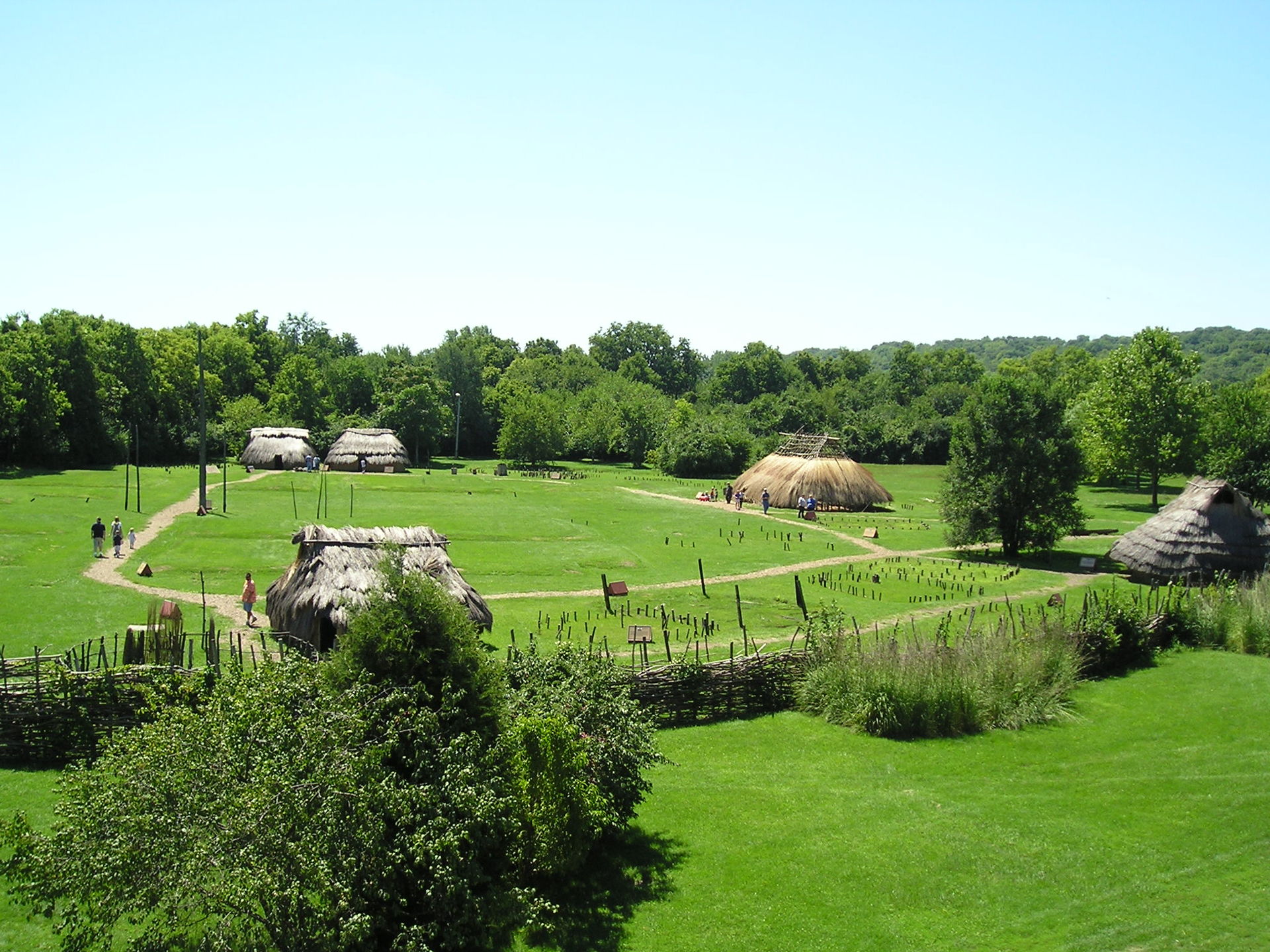
Fort Ancient 1000–1750 CE, Mississippian-influenced Late Prehistoric · Fort Ancient (Central Algonquian, Fort Ancient tradition)
Reconstructed Fort Ancient circular village (3 acres) on Great Miami River terrace at Dayton: central plaza 42 m diameter ringed by post-mold houses, stockade with bastions, and reconstructed cedar…
🇺🇸 United States · Archaeological wonder
Pueblo II–III Bonito 1000–1150 CE · Ancestral Pueblo (Chacoan)
Chacoan Sun Dagger butte: three slabs create dagger beam on spirals marking solstices and lunar standstill.
🇺🇸 United States · Tell
Ancestral Puebloan (c.600-1300 CE) · Anasazi/Puebloan (Basketmaker to Pueblo III)
Keet Seel Cliff Dwelling — buried ancestral tell/village at Arizona.
🇺🇸 United States · Earthwork
Plaquemine Mississippian Emerald phase 1250–1600 CE · Plaquemine (Natchez)
Second-largest mound in N America, 10.7 m terraced pyramid, 1250–1600 CE.
🇺🇸 United States · Earthwork
Archaic–Woodland 1000 BCE–1000 CE · Woodland / Archaic
36.5-m quartz eagle effigy, 1000–500 BCE.
🇺🇸 United States · Ancient village
Pueblo I-II-III; Chuskum-Chacoan · Chacoan × Chuskan frontier (Chuska timber route)
Mesa-top wedge great house on West Mesa promontory (900–1125 CE) controlling west gap and Chuska roads — crescent plan with great kiva and hinterland pictograph.
🇺🇸 United States · Tell
Ancestral Puebloan (c.600-1300 CE) · Anasazi/Puebloan (Basketmaker to Pueblo III)
Betatakin Cliff Dwelling — buried ancestral tell/village at Arizona.
🇺🇸 United States · Ancient city
Caddoan Mississippian 800–1300 CE (Early Caddo) · Caddoan (Hasinai)
Southernmost Caddoan Mississippian center with three mounds, plaza and El Camino trace.
🇺🇸 United States · Archaeological wonder
Pueblo III 1190–1280 CE (Ancestral Puebloan florescence) · Ancestral Puebloan (Anasazi, Pueblo III)
Largest cliff dwelling in North America: 150 rooms, 23 kivas, 128–150 inhabitants in alcove 88 m deep, 27 m high below mesa top, with coursed sandstone masonry, tower structures and painted plaster,…
🇺🇸 United States · Archaeological wonder
Ancestral Pueblo Virgin branch Basketmaker III–Pueblo II · Ancestral Pueblo (Virgin Anasazi / Ancestral Pueblo)
100-room Virgin Anasazi pueblo complex partly drowned by Lake Mead, 300 BCE–1150 CE.
🇺🇸 United States · Rock art
Archaic to Protohistoric (7000 BP–1700 CE) · Paleoindian through Dakota
Midwest's largest petroglyph site: 4000 carvings 7000 BP–1700 CE on quartzite outcrop tracing 7000 years.
🇺🇸 United States · Earthwork
Middle Woodland Hopewell 100–400 CE · Hopewell tradition (Turner phase)
Hopewell enclosure-mound group source of copper effigies and mica tombs on Little Miami terrace.
🇺🇸 United States · Earthwork
Early Woodland, Adena culture 1000 BCE–1 CE (peak 250–150 BCE) · Adena
Largest conical burial mound in North America (62 ft/19 m high, 240 ft/73 m diameter, 60,000 tons earth moved by basket) built by Adena peoples at Moundsville, WV.
🇺🇸 United States · Earthwork
Hopewell 1–500 CE (Middle Woodland, peak 100–400 CE) · Hopewell tradition (Scioto Hopewell)
Finest Hopewell enclosure: 13-acre (5.3 ha) flat-topped earthen-walled enclosure (1,211 m perimeter, 1–1.8 m high) near Scioto River enclosing 24 conical, elongated and effigy mounds.
🇺🇸 United States · Tell
Ancestral Puebloan (c.600-1300 CE) · Anasazi/Puebloan (Basketmaker to Pueblo III)
Homolovi II Pueblo — buried ancestral tell/village at Arizona.
🇺🇸 United States · Tell
Ancestral Puebloan (c.600-1300 CE) · Anasazi/Puebloan (Basketmaker to Pueblo III)
Kin Biniola Chaco Outlier — buried ancestral tell/village at New Mexico.
🇺🇸 United States · Earthwork
Mississippian Emergent–Early 900–1150 CE · Mississippian (Cahokia)
Mississippian timber Stonehenge: 410 m 48-post solar calendar aligned to Monks Mound solstice.
🇺🇸 United States · Archaeological wonder
Ancestral Hopi (Hisatsinom) to Historic Hopi 900 CE–present · Hopi (Hisatsinom, Hopi-Tewa)
Continuously inhabited 900 CE Hopi terraced pueblo atop 300-m mesa.
🇺🇸 United States · Archaeological wonder
Pueblo II–III 1120–1250 CE (post-Sunset Crater) · Sinagua / Ancestral Puebloan (Hisatsinom) with Mogollon/Hohokam influences
100-room red-Moenkopi sandstone pueblo with tower-kiva and Hopi-style ballcourt, outlier of Sinagua-Hisatsinom frontier after Sunset Crater eruption (1085 CE) improved farming.
🇺🇸 United States · Earthwork
Mississippian Early 900–1200 CE atop Woodland-Archaic · Mississippian (Lamar and Etowah)
17,000-year occupation culminating in 17 m Temple Mound, 900–1200 CE.
🇺🇸 United States · Rock art
Archaic to present (1000 BCE–present) · Sioux (Dakota/Lakota/Nakota), Oneota predecessors
2,000-year sacred catlinite quarries: 3000 pits in Sioux quartzite cliff plus thunderbird petroglyphs.
🇺🇸 United States · Earthwork
Middle Woodland 80–550 CE · Middle Woodland (Hopewell-related)
2.75 km stone-walled hilltop enclosure, solstice-aligned, 80–550 CE.
🇺🇸 United States · Ancient village
Pueblo II–III 1050–1300 CE (Mesa Verde phase) · Ancestral Pueblo (Mogollon-Mesa Verde)
Largest Mesa Verde town: 600 rooms, 170 kivas, 22 m Great Kiva and Chaco-style great house.