Search places, or jump to a section
Tagsziggurat
23 places carry this tag, across every kind and continent it appears in.
🇹🇲 Turkmenistan · Ancient city
Namazga II–IV 3200–2000 BCE (Late Chalcolithic to Early Bronze) · Namazga oasis (Pre-BMAC) → BMAC (Bactria-Margiana)
Middle–Late Chalcolithic to Early Bronze oasis town (c.3200–2000 BCE, Namazga II–IV) between Namazga and the Karakum — 26 ha walled town famous for its Ziggurat-like mudbrick 'altar' complex (massive…
🇸🇾 Syria · Pyramid
Early Bronze to Old Babylonian (2900–1759 BCE) · Sumerian, Amorite
Legendary Euphrates emporium at Tell Hariri, 120 km south-east of Deir ez-Zor, capital of Amorite kingdom under Yahdun-Lim and Zimri-Lim, sacked by Hammurabi 1761 BCE, freezing palace archive of…
🇮🇶 Iraq · Pyramid
Ubaid to Early Dynastic (5000–2500 BCE), High Temple Late Uruk 3500 BCE · Halaf-Ubaid-Uruk (Northern Mesopotamian)
Tall stratified tell 20 m high near Mosul, with Halaf-Ubaid to Early Dynastic sequence including the monumental High Temple terrace (Late-Uruk, c.3500 BCE) — mudbrick podium 11x10 m with niched…
🇮🇶 Iraq · Pyramid
Old Babylonian (Isin-Larsa) 1950–1750 BCE · Babylonian (Isin-Larsa)
Old Babylonian fortified administrative town (c.1900–1750 BCE, Isin-Larsa to Hammurabi era) now Tell Harmal on Baghdad's eastern edge, dominated by central 25x25 m raised temple platform (ziggurat…
🇮🇶 Iraq · Pyramid
Early Dynastic to Akkadian (3000–2150 BCE) · Sumerian–Akkadian (Diyala/ Akkadian frontier)
Southern Diyala town of Early Dynastic to Akkadian period dominated by 60x55 m Temple of Shara built on high mudbrick terrace (proto-ziggurat) with massive enclosure and two shrines (Shrine I and II)…
🇮🇷 Iran · Tell
Neolithic to Iron Age II (c.6000–800 BCE; continuum sample) · Iranian Plateau local → Proto-Elamite → Old Elamite (?) → Iron Age Median-affinity
Iran's longest tell with two ziggurats — carbon-painted Sialk ware and Median horse burials.
🇸🇾 Syria · Pyramid
Early Bronze to Neo-Assyrian (2500–609 BCE) · Hurrian–Mitanni to Neo-Assyrian
Multi-period tell 30 m high on Khabur bend, capital of Shadikanni kingdom (1050–600 BCE) succeeded by Neo-Assyrian palace terrace (Adad-nirari II to Ashurbanipal).
🇮🇶 Iraq · Pyramid
Early Dynastic to Isin-Larsa (2600–1760 BCE) · Sumerian–Akkadian (Me-Turan / Simurrum)
Twin-mound Late Early Dynastic to Isin-Larsa city (Me-Turan) on Diyala-Adhaim confluence engulfed by Hamrin reservoir fringe.
🇮🇷 Iran · Pyramid
Elamite Middle Elamite (1344–1300 BCE) · Elamite (Middle Elamite)
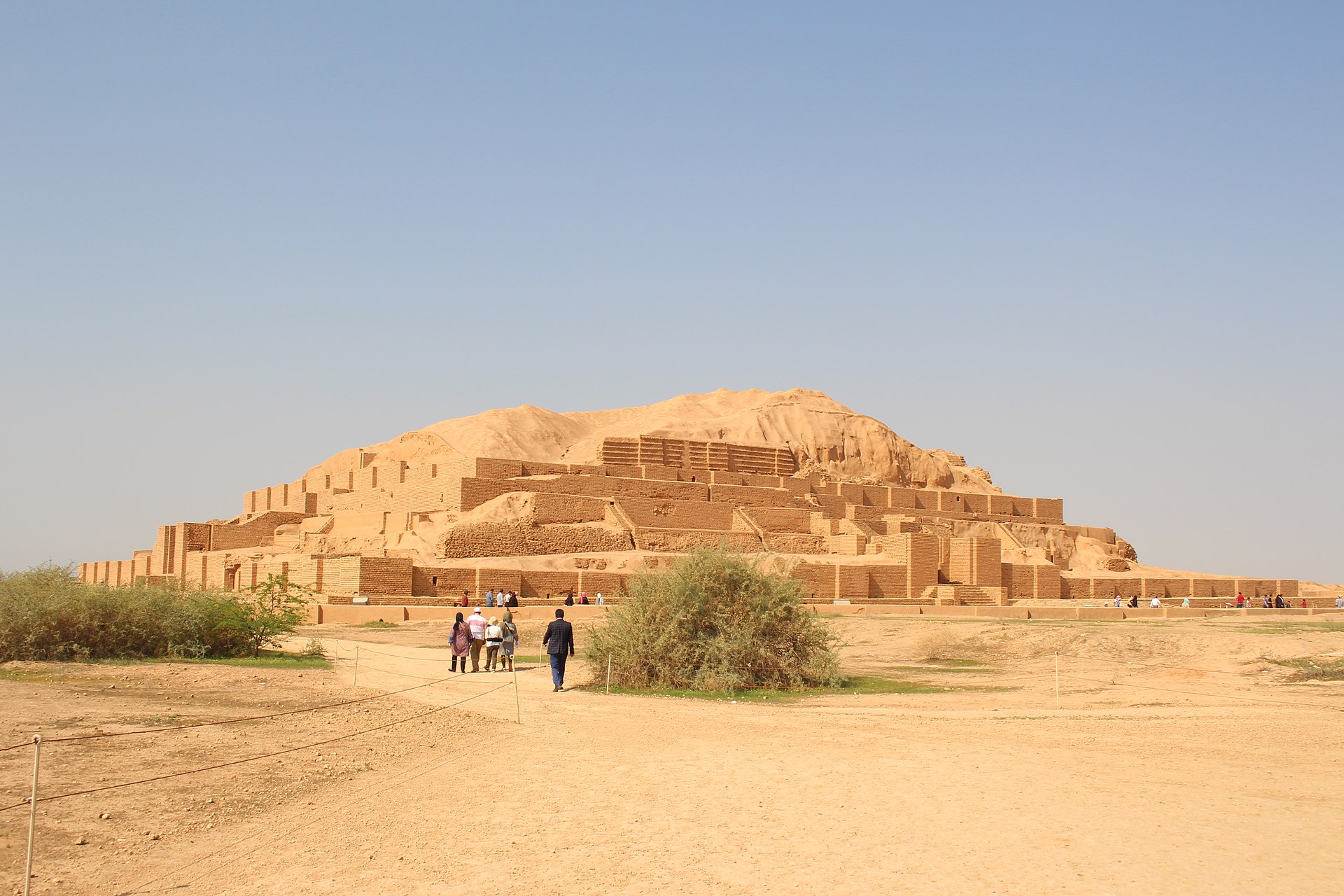
Largest Mesopotamian-related ziggurat outside Mesopotamia: Elamite holy city Dur-Untash by King Untash-Napirisha (1344–1306 BCE) for god Inshushinak.
🇮🇶 Iraq · Pyramid
Jemdet Nasr to Old Babylonian (3000–1750 BCE) · Sumerian–Akkadian (Diyala)
Major Diyala valley city (3000–1800 BCE) with the iconic Temple Oval — 80x75 m double-walled oval enclosure with inner 36 m oval temple terrace rising 4 m — earliest oval ziggurat precursor (Jemdet…
🇸🇾 Syria · Pyramid
Early Bronze to Iron Age II (2500–700 BCE) · Amorite–Hittite–Aramean (Luhuti / Assyrian)
Tall acropolis tell 20 m high with second-millennium Middle Bronze palace and Late Bronze temple, capped by Iron Age I (Aramean) 30x22 m ashlar temple terrace — proto-pyramidal podium for storm-god…
🇮🇶 Iraq · Tell
Early Dynastic to Middle Assyrian (c.3000 BCE to 1100 BCE, peak Old Babylonian 1800–1500 BCE) · Assyrian / Mitanni / Old Babylonian (Qattara/Karana)
Major Assyrian mound Tell al-Rimah (ancient Qatara/Karana) on Sinjar plain: 600×400 m tell 30 m high with central high temple mound and Old Babylonian ziggurat stump 40×40 m, 15 m high with mudbrick…
🇮🇶 Iraq · Pyramid
Early Dynastic to Old Babylonian (3000–1750 BCE) · Sumerian–Akkadian (Kish)
Eastern mound of the Sumerian city-state Kish (3200–2200 BCE), once Sargon's capital, dominated by Early Dynastic III 60x45 m Temple Oval ziggurat-like terrace and later 3-stair Old Babylonian…
🇮🇶 Iraq · Pyramid
Early Dynastic to Old Babylonian (3000–1760 BCE), Isin-Larsa Eshnunna · Sumerian–Akkadian (Eshnunna Dynasts)
Capital of powerful Eshnunna kingdom (2100–1760 BCE) ruling Diyala and parts of Elam trade. Central tell holds Palace of the Rulers (45x38 m courtyard palace) and 32x30 m Shu-Sin (Ur III)…
🇸🇾 Syria · Pyramid
Early Bronze to Late Bronze Age (2600–1200 BCE), Amorite–Mitanni · Amorite–Hurrian–Mittanian (Qatna kingdom)
Major Bronze Age kingdom capital (2600–1200 BCE) 100-hectare walled city with 20 m-high Upper City acropolis and famed 150x100 m Late Bronze Age Palace of Qatna (2000–1340 BCE) containing intact…
🇮🇶 Iraq · Ancient city
Ubaid to Neo-Babylonian · Ubaid → Sumerian → Babylonian
Sumerian sacred city traditionally first city in the world (Sumerian King List), center of god Enki/Ea cult (Abzu).
🇮🇶 Iraq · Pyramid
Neo-Assyrian (883–612 BCE imperial capital; ziggurat 883 BCE) · Assyrian (Neo-Assyrian)
Assyrian imperial second capital Kalhu/Nimrud (Assurnasirpal II 883–859 BCE): mudbrick ziggurat crowning citadel mound adjacent to Northwest Palace with famous Nimrud ivories, throne room and lamassu.
🇮🇶 Iraq · Pyramid
Old Babylonian to Neo-Babylonian (Hammurabi to Nebuchadnezzar II peak 605–562 BCE) · Babylonian (Borsippa)
Mighty 7-stage ziggurat dedicated to Nabu (god of writing, son of Marduk), rival to Babylon's Etemenanki as 'Temple that Exalts Nabu' E-zida.
🇮🇷 Iran · Temple complex
Middle Elamite (c.1250–640 BCE) · Elamite
Elamite holy city built by King Untash-Napirisha (1250 BCE) to honor god Inshushinak: immense 105×105 m square ziggurat (originally 53 m high, 5 storeys) at center of three concentric walls with…
🇮🇶 Iraq · Pyramid
Ubaid to Ur III (5400–2112 BCE; ziggurat Ur III 2112–2000 BCE) · Sumerian (Eridu, Ubaid → Uruk → Ur III)
Tell at supposed first Sumerian city Eridu, sacred to water god Enki/Ea (Abzu). Eighteen superimposed mudbrick temples (Ubaid 5400–3800 BCE) culminating in Ur III ziggurat (~250 × 300 m enclosure, 3…
🇮🇶 Iraq · Pyramid
Ur III (Neo-Sumerian) 2112–2094 BCE core; Old Babylonian veneer · Sumerian (Ur III)
Best preserved neo-Sumerian ziggurat: three-stage mudbrick massif 62.5 × 43 m base, 30 m high (reconstructed), built by Ur-Nammu (2112–2095 BCE) and Shulgi for moon god Nanna (Sîn), with three…
🇮🇶 Iraq · Ancient city
Ubaid to Persian (c.3800 BCE–300 BCE; Early Dynastic/Ur III peak 2600–2000 BCE) · Sumerian / Akkadian / Babylonian / Persian
Sumerian city-state of the moon god Nanna (Sîn), Ur famous for Woolley's excavations 1922–34: Ziggurat of Ur-Nammu (2112 BCE) best-preserved ziggurat, Royal Cemetery with Standard of Ur, Pu-abi's…
🇮🇶 Iraq · Ancient city
Early Dynastic Sumer to Akkadian · Sumerian / Akkadian
Key Sumerian city-state (c.3100–2000 BCE) dominating Early Dynastic Sumer, palace A, ziggurat, mentioned in King List as first city to have kingship after Flood. Discovered library archives.